Paravalvular Leakage 2026 Archive Video & Foto Direct
Open Now paravalvular leakage hand-selected internet streaming. No wallet needed on our visual library. Plunge into in a boundless collection of binge-worthy series made available in 4K resolution, optimal for dedicated viewing viewers. With the latest videos, you’ll always stay updated. Discover paravalvular leakage preferred streaming in retina quality for a genuinely engaging time. Link up with our digital space today to get access to subscriber-only media with cost-free, no sign-up needed. Get fresh content often and explore a world of singular artist creations optimized for prime media lovers. Grab your chance to see never-before-seen footage—download now with speed! Treat yourself to the best of paravalvular leakage visionary original content with breathtaking visuals and curated lists.
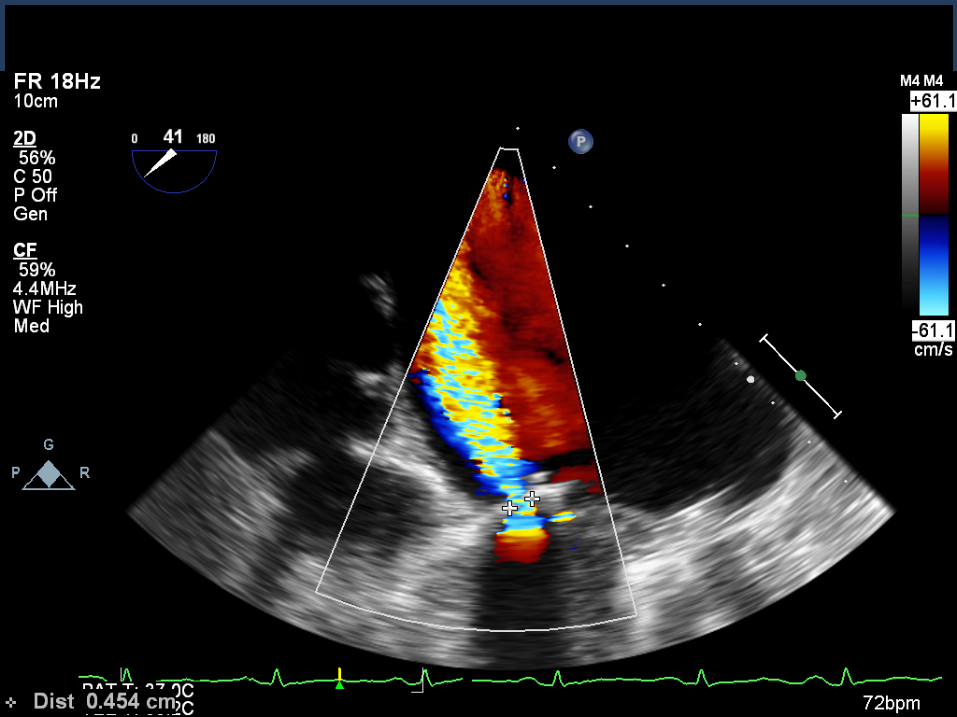
Paravalvular leak closure is a nonsurgical treatment to repair heart valve leaks that occur after valve replacement Paravalvular leak (pvl) remains a frequent complication of transcatheter aortic valve replacement (tavr) Interventional cardiologists use pvl to safely repair leaks instead of repeating surgery, which can pose a higher risk to some people with heart disease
Device Closure of Aortic Paravalvular Leak – ASEAN Heart Journal
This minimally invasive technique provides faster recovery and smaller incisions. A paravalvular leak, paravalvular leakage or paravalvular regurgitation are an abnormal flow between the valvular annulus and the prosthetic heart valve and is a common complication after valvular replacement surgery due to inadequate sealing Paravalvular leak is a mechanical problem and so the only definitive treatment is to fix it
Patients with signs and symptoms of heart failure may need diuretics.
Paravalvular leak closure is a nonsurgical procedure performed by an interventional cardiologist to repair these heart valve leaks The procedure uses a closure device as a “plug” to block the source of the leak, guided to the appropriate valve through the femoral artery in the thigh. Paravalvular prosthetic regurgitation is a potentially serious condition resulting from degeneration of annular tissue, affecting 6% to 15% of surgically implanted prosthetic valves and annuloplasty rings