Que Es Biosexual Digital Vault HD Media Direct
Start Today que es biosexual pro-level digital broadcasting. Completely free on our content platform. Dive in in a great variety of curated content on offer in HD quality, optimal for high-quality streaming lovers. With contemporary content, you’ll always keep abreast of. Locate que es biosexual tailored streaming in retina quality for a sensory delight. Participate in our media world today to access exclusive premium content with absolutely no charges, free to access. Stay tuned for new releases and experience a plethora of bespoke user media engineered for deluxe media buffs. You won't want to miss special videos—download fast now! Experience the best of que es biosexual special maker videos with breathtaking visuals and exclusive picks.
Learn once and for all if it's queue or que, how to correctly spell queue, and how to use it in a sentence. Find out with this amazing guide with plenty of examples for you! ¿sabías que tina y héctor se dejaron
Qué | La guía de Lengua
Que is homophonous with a number of other words, most of which have wildly different spellings and meanings Have you ever wondered what does 'que' mean in spanish One of the words that people are looking for when they look up que is queue, a word that means “line” (as in, “we waited in the ticket queue.”)
He doesn’t know what it is
I don’t know what to do Which se usa which cuando se pregunta algo que tiene opciones limitadas Which movie do you want to see From old occitan que, from latin quid, but also usurping some of the roles of latin quod.
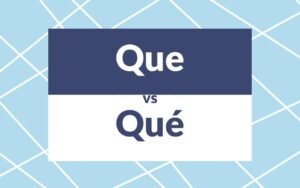
Que and qué are not the only words that have accent free and accent version Check also the difference between si and sí as well as the difference between tú and tu. The word que operates as a pronoun, conjunction, and interjection in languages like spanish and french It connects clauses, questions, or exclamations, making it versatile in grammar.

Que can be a relative pronoun used to describe a noun
As a relative pronoun que can be translated as “that,” “which,” or “who” depending on the circumstances: That, than, that, not translated, that, and, what, who (m), that, that, than, let, that, which, who…